Sunday, 16 October 2011
Gracias Don Miguel Ángel
Sunday, 21 November 2010
Antimatter trapped at CERN
Antimatter trapped at CERN. here is the press release and a summary form the source:
Source: CERN Press Release"The ALPHA experiment at CERN has taken an important step forward in developing techniques to understand one of the Universe’s open questions: is there a difference between matter and antimatter? In a paper published in Nature today, the collaboration shows that it has successfully produced and trapped atoms of antihydrogen. This development opens the path to new ways of making detailed measurements of antihydrogen, which will in turn allow scientists to compare matter and antimatter.
Antimatter – or the lack of it – remains one of the biggest mysteries of science. Matter and its counterpart are identical except for opposite charge, and they annihilate when they meet. At the Big Bang, matter and antimatter should have been produced in equal amounts. However, we know that our world is made up of matter: antimatter seems to have disappeared. To find out what has happened to it, scientists employ a range of methods to investigate whether a tiny difference in the properties of matter and antimatter could point towards an explanation."
Friday, 29 October 2010

Saturday, 18 September 2010
Saturday, 4 September 2010
¿Incentivos? olvidate del garrote y saca las zanahorias
¿Qué esta factores están jugando un papel importante en este resultado?
Probablemente el hecho de recibir un gesto de amabilidad en vez de un castigo juega un papel importante, reciprocidad, percepción de un ambiente de soporte o ayuda y decidir embonar acorde, y seguro algunas otras cosas más.
También lo discuten en Nudge, dónde enfatizan el factor sorpresa y la amabilidad + el recadito.
Monday, 19 October 2009
Tuesday, 1 September 2009
Yrjo Jahnsson Award in Economics 2009


Fabrizio Zilibotti has made important contributions to macroeconomics, political economics and labor economics. In particular, he has greatly improved our understanding of how technological innovation affects economic growth at different stages of economic development. He also contributed to the positive analysis of the welfare state, explaining how economic and political forces interact to shape government redistribution. (enlace)
John Van Reenen has made several contributions to the empirical analysis of labour markets, competition policy and industrial economics, especially in areas relating to productivity growth, management practices, R&D, intellectual property, and investment decisions. (enlace)
Así que si a alguien le interesan estos temas ahí tiene dos buenas fuentes, al menos a criterio del comité de este premio. ¿por qué no hay un premio así para economistas latinoamericanos? Esta el premio Carlos Díaz Alejandro de LACEA pero premia economistas trabajando en EUA en su mayoria [1998: EDMAR BACHA (PUC-Rio); 2000: ARNOLD HARBERGER (UCLA and University of Chicago);
2002: RUDIGER DORNBUSCH (MIT) (post mortem); 2006: GUILLERMO CALVO (Columbia); 2008 Jere Behrman (Penn)]. Alguien podrá decir ¿y qué? pues que el chiste es también que estén acá en Latino América educando economistas y haciendo investigación, ya se que no hay los incentivos necesarios la pregunta es ¿qué se esta esperando para proveerlos? Además, creo que el límite de edad de 40 (JBC) y 45 (YJ) años no aplicaría en Latino América, acá la cosa es diferente, los logros se dan más viejo y a más largo plazo, algo que el premio CDA parece tomar en cuenta. En fin... felicidades a todos los economistas por estos dos ilustres especímenes que nos deleitaron, nos deleitan o nos deleitaran con sus contribuciones...
Friday, 31 July 2009
Inspiring
Topology, Differential Geometry, Complex Analysis
University of Bonn; former Director of Max Planck Institute for Mathematics, Bonn
"In March of 1945, I became a soldier and in April, a prisoner of war, surviving in the meadows along the Rhine, always under the open sky in rain and sunshine, scribbling mathematics on toilet paper, the only paper available."
Source: http://seedmagazine.com/slideshow/mathematicians/
Friday, 29 May 2009
Hat Tip señores Martin Osborne y Ariel Rubinstein
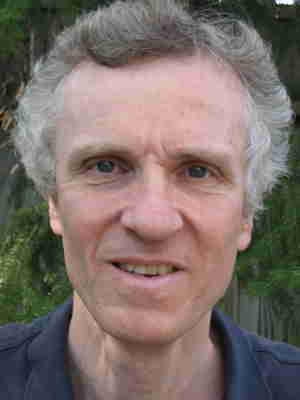

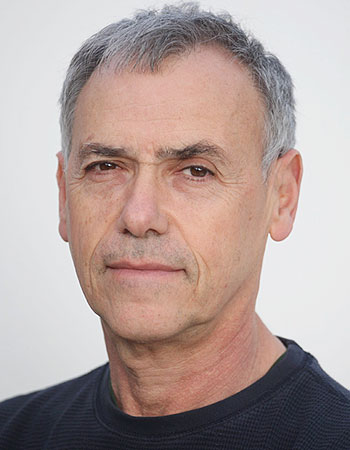
Ariel Rubinstein y Martin Osborne tienen otro de sus libros para libre acceso en internet. Con este ya son 5 libros que Ariel libera para uso personal:
- Bargaining and Markets, with M. Osborne, Academic Press 1990.
- A Course in Game Theory, with M. Osborne, MIT Press, 1994.
- Modeling Bounded Rationality, MIT Press, 1998.
- Economics and Language, Cambridge University Press, 2000.
- Lecture Notes in Microeconomics (modeling the economic agent), Princeton Univeristy Press, 2005.
Martin tiene en su página un monton de tutoriales de libre acceso en matemáticas para economistas y teoría de la empresa y equilibrio en la industria, consejos sobre como escribir libros academicos en economía y archivos LaTeX con varios formatos.
Tanto Martin Osborne como Ariel Rubinstein son miembros de la Society for Economic Theory y miembros del comité editorial de la revista Theoretical Economics
Hat Tip para ambos señores
Monday, 26 January 2009
2 cosillas
- William Easterly inició un Nuevo blog: Aid Watch. Promete ser brutalmente honesto cuando la ayuda no esté apoyando a los pobres y enaltecerla cuando sí.
- Eduardo Punset citando su filosofía de vida (aquí) menciona que Maurice Thorez le dijo lo siguiente: “hay que estar siempre delante de las masas, pero no demasiado delante que te encuentres solo y gesticulando”. Creo que esta filosofía aplica muy bien al caso de los economistas, a menudo la gente (el vulgo) se queja de que no se nos entiende mucho, o nada, y a muchos de nosotros eso parece estremecernos de gozo. Nos quedamos solos y gesticulando. Cabe recordar que aunque la ciencia económica pareciera estar hecha para que la gente no la entienda,
debemosprocurar popularizarla al menos parcialmente. Aún y cuando sea placentero sentirse “intelectual”, “científico”, en el mismo plano que Bohr, Darwin y von Neumann e incluso en el mismo conjunto al cual pertenece Grigory Perelman,debemos, en promedio, tender a llegarle a las masas, si estudiamos el comportamiento humano desde un particular punto de vista (el del economista) por qué no enseñarle a los no economistas cosas referentes a cómo funcionan los incentivos, cuales son los paradigmas de la racionalidad, por qué es mala la inflación, entre otros… quien quita y en una de esas convertimos el planeta en uno habitado únicamente por homo economicus, aunque de esa forma ya no seríamos una especie ajena...
Tuesday, 13 January 2009
Thursday, 1 January 2009
2009: Año internacional de la astronomía

Wednesday, 31 December 2008
El ultimo y nos vamos
El ultimo post del año. No me voy a poner sentimentalista ni irreal, pero si voy a proponerme empezar con muchas nueces el próximo año. Este año me dejo chingos de cosas nuevas, lecciones que ahora si no olvidare, se cerraron varias puertas e hice lo más importante al emprender proyectos: empezar. También reforcé mi amistad con unos cuantos, incluida Mariana, y comencé a tratar a otros más, todos muy a toda madre. A partir de este año empecé a acumular pedigrí, ya me pueden llamar licenciado o maestro, me acerque más al sub mundo profesional en el que quiero habitar, la academia, y aprendí que enfocar esfuerzos es importante, leer de un tema hasta el aburrimiento te hace “experto” a los ojos de quienes acostumbran calificarte. Aprendí también que no tengo habilidades y debilidades tan distintas a las de otros, la diferencia entre un resultado de examen, en el trabajo o un proyecto y un resultado en la vida, aprendí a ser padre de un niño menor de 2 años, como pasarla en la fiesta de dos años de mi hijo y a comportarme como papá de vez en cuando y no como amigo de mi hijo.
Este año también fue duro en cuanto a prospectos laborales. Me quede sin jale de base y la mayoría de las plazas a las que solicite se congelaron debido a la crisis, haciéndome una de las primeras víctimas de esta estúpida (en cuanto a sus raíces) crisis. También fije la mira más en ganar el pedigrí que piden para ser parte de la mayoría de las universidades y espero que el año que entra por fin se me haga empezar el viaje a través del infierno (así lo pintan los que han estado allá, aunque ex post tienden a minimizar el trauma, ¿vanidad, ego?)
Tengo 49 drafts en mi blog y 94 en mi cuenta de correo de gmail. La inmensa mayoría son victima de mi auto censura y mi auto censura es principalmente una manifestación de un poco de paranoia personal, pero sobre todo del vandalismo de quienes tienen el poder. No quería quedarme sin trabajo antes de buscarlo así que mejor callé boca, mal pedo de mi parte. El próximo tal vez venga un poco más relajado, Mariana me dice entre rollos que en realidad yo debería escribir más natural y menos alineado; más creativo y menos pomposo, más ingenuo y menos pseudo adulto… ya veremos, jejeje
En fin, salud, trabajo y chingos de amor… menos racionalidad y más feeling. Abrir nuevas puertas y concretar resultados. Para todos...
Wednesday, 22 October 2008
Una profesión chida

I don't believe I can really do without teaching. The reason is, I have to have something so that when I don't have any ideas and I'm not getting anywhere I can say to myself, "At least I'm living; at least I'm doing something; I am making some contribution" -- it's just psychological.
When I was at Princeton in the 1940s I could see what happened to those great minds at the Institute for Advanced Study, who had been specially selected for their tremendous brains and were now given this opportunity to sit in this lovely house by the woods there, with no classes to teach, with no obligations whatsoever. These poor bastards could now sit and think clearly all by themselves, OK? So they don't get any ideas for a while: They have every opportunity to do something, and they are not getting any ideas. I believe that in a situation like this a kind of guilt or depression worms inside of you, and you begin to worry about not getting any ideas. And nothing happens. Still no ideas come.
Nothing happens because there's not enough real activity and challenge: You're not in contact with the experimental guys. You don't have to think how to answer questions from the students. Nothing!
In any thinking process there are moments when everything is going good and you've got wonderful ideas. Teaching is an interruption, and so it's the greatest pain in the neck in the world. And then there are the longer period of time when not much is coming to you. You're not getting any ideas, and if you're doing nothing at all, it drives you nuts! You can't even say "I'm teaching my class."
If you're teaching a class, you can think about the elementary things that you know very well. These things are kind of fun and delightful. It doesn't do any harm to think them over again. Is there a better way to present them? The elementary things are easy to think about; if you can't think of a new thought, no harm done; what you thought about it before is good enough for the class. If you do think of something new, you're rather pleased that you have a new way of looking at it.
The questions of the students are often the source of new research. They often ask profound questions that I've thought about at times and then given up on, so to speak, for a while. It wouldn't do me any harm to think about them again and see if I can go any further now. The students may not be able to see the thing I want to answer, or the subtleties I want to think about, but they remind me of a problem by asking questions in the neighborhood of that problem. It's not so easy to remind yourself of these things.
So I find that teaching and the students keep life going, and I would never accept any position in which somebody has invented a happy situation for me where I don't have to teach. Never
.
Richard Feynman (1986). "'Surely You're Joking Mr. Feynman!' Adventures of a Curious Character", Bantam Books: New York, 1986
STP & NIN: Mamalón
El Grunje vive jajajaja....


Monday, 13 October 2008
Paul Krugman

Paul Krugman es el ganador del Nobel en economía de este año. Independientemente de sus contribuciones a la ciencia y que realmente es merecedor e iba a ganar el premio algún día, Krugman es, a mi juicio, una elección pertinente sobre todo dado el ambiente económico actual. Su áreas de investigación y contribución son comercio internacional y economía geográfica, estudió los patrones de comercio y los detonantes de procesos de urbanización entre otras cosas (tipo de cambio y crisis cambiarias dice Esquivel). Por otro lado, ha sido un crítico fehaciente de Bush y su política y sobre la crisis financiera actual; además, fuera del círculo académico ha dedicado parte de su carrera al periodismo algo que definitivamente lo ha acercado a las masas. Así que: ¡qué mejor que un anti-Bush, anti-Republicano, estudioso de áreas involucradas con el crecimiento y el desarrollo, periodista, popular y apreciado economista para ganar el premio nobel! Como dicen en inglés "perfect timing". Acá pongo unos enlaces a los comentarios de algunos que saben del tema: Dani Rodrik, Mankiw, DeLong, Esquivel, MR (con muchos enlaces) y por supuesto los del comité de elección.
PD Algo ñoñisticamente extraño me paso hace algunos días, soñé que Mankiw ganaba el nobel y que yo cabronamente me encabronaba, jajajaja, no sé que issues traeré en el patio de mi tatema, hasta ahora solo se me ha hecho privadamente curioso.
Monday, 11 August 2008
Monday, 19 May 2008
El uso de mi racionalidad acotada para procrastinar justificadamente vía mi singularidad
Estoy leyendo sobre tres temas y haciendo un ritual cada martes de 10.00 AM a 10.45 AM que en conjunto últimamente han sido una fuente de imaginación muy productiva. Desafortunadamente por el momento me es imposible mostrar evidencia física de esta supuesta productividad, ni modo así son estas cosas, tal vez si llego a tener más herramientas pueda hacer un modelillo para evidenciar mi ignorancia en todos los temas. Lo que si puedo mostrar es lo que estoy leyendo. Uno de los temas es racionalidad acotada (bounded rationality), el otro es falsa singularidad y la percepción de uno mismo (false uniqueness) y el ultimo es procrastinación (procrastination). Sobre racionalidad acotada estoy leyendo Bounded Rationality de Gigerenzer y Selten; sobre falsa originalidad estoy leyendo Explaining False Uniqueness: Why We are Both Better and Worse Than Others; sobre procrastinación estoy leyendo los artículos que aparecen la revista Slate y que trae una parte sobre como los economistas abordan el tema. Cuando los termine de leer (pronto) y cuando los digiera (dentro de mucho) comentare algo al respecto. Por lo pronto aquí mis avances: 1) No soy único y en promedio no soy mejor ni peor que otros; 2) a pesar de haber sido entrenado (no educado) como economista, no soy un agente racional, sino más bien un agente con racionalidad acotada, tal vez muy acotada para ser economista; 3) La palabra procrastinar existe en español; 4) Procrastinar es distinto a echar la hueva eternamente, por lo tanto no soy huevón crónico; 5) Procrastinar es un derecho universal, hacer las cosas a tiempo también; 6) Postear en mi blog, leer otros blogs, leer (que no entender) el periódico, the economist, der spiegel, scientific american, nature, new scientist, letras libres, indigo, entre otros en el corto plazo es procrastinar mientras que a muy largo plazo es una inversión; 7) para empezar lo que quiero terminar necesito dejar de procrastinar; 8) de lejitos soy del promedio, ya de cerca me distingo por varias desviaciones estándar; 9) mi comportamiento se distribuye aproximadamente como una función Ru-cuadrada y finalmente 10) necesito eficientizar el uso de mi tiempo libre.
Saludos,




 Posts
Posts


